ADVANCED WINE FAULTS COURSE
For Working Wine Professionals
Learn how to identify and recognise common wine faults — directly in the glass, through smell and taste. Improve your sensory evaluation of faulty wines.
“I'm a sommelier in a restaurant, working alone, and sometimes I have to confess: I'm not able to identify some subtle wine faults, even if I know there's something wrong. This generates a lot of frustration. I was so enthusiastic to discover the existence of your courses. Indeed, I need to improve my skills and fill my gaps.”
— Clarisse, Luxembourg
ABOUT THIS COURSE
What Can You Expect?
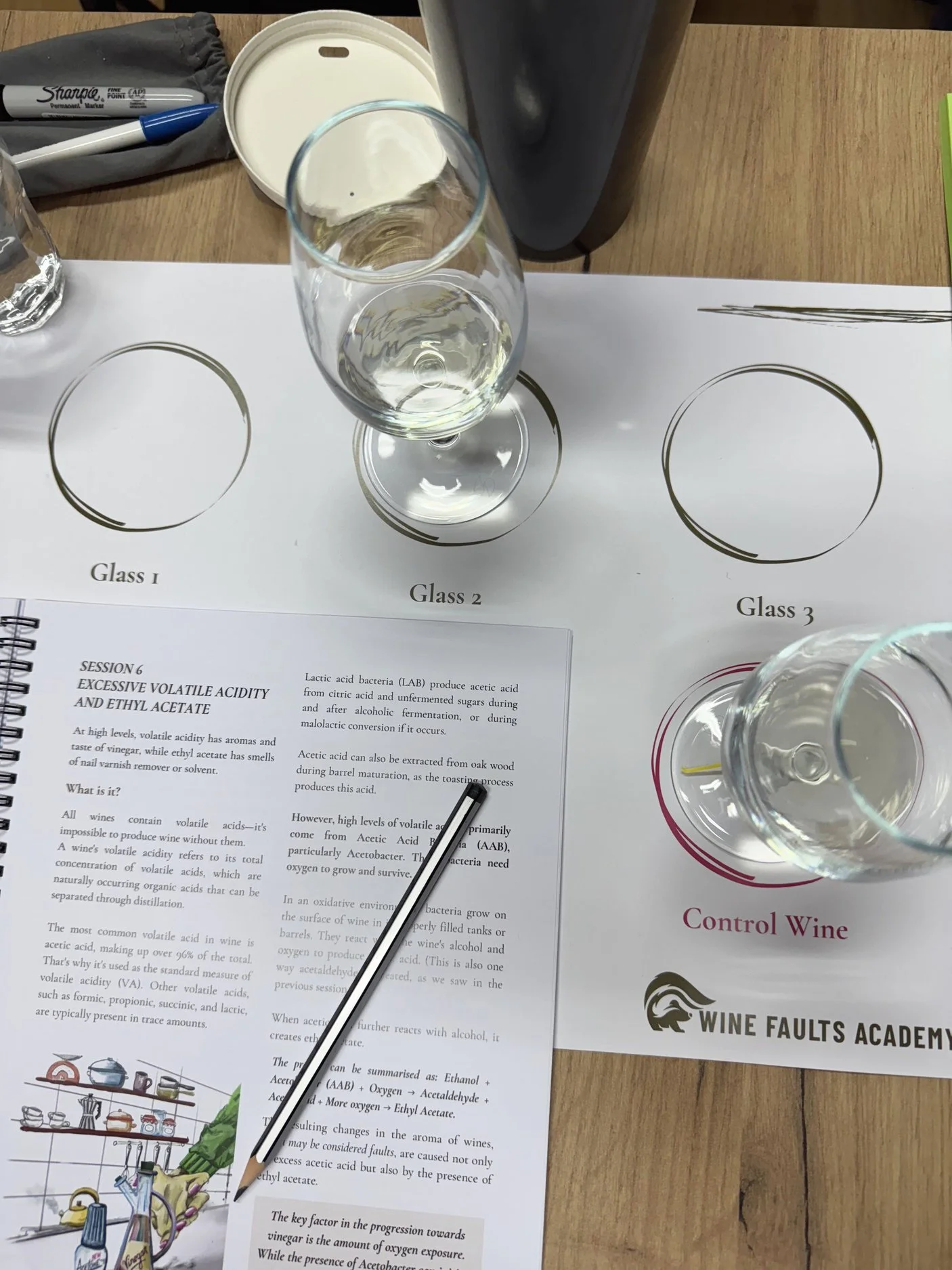
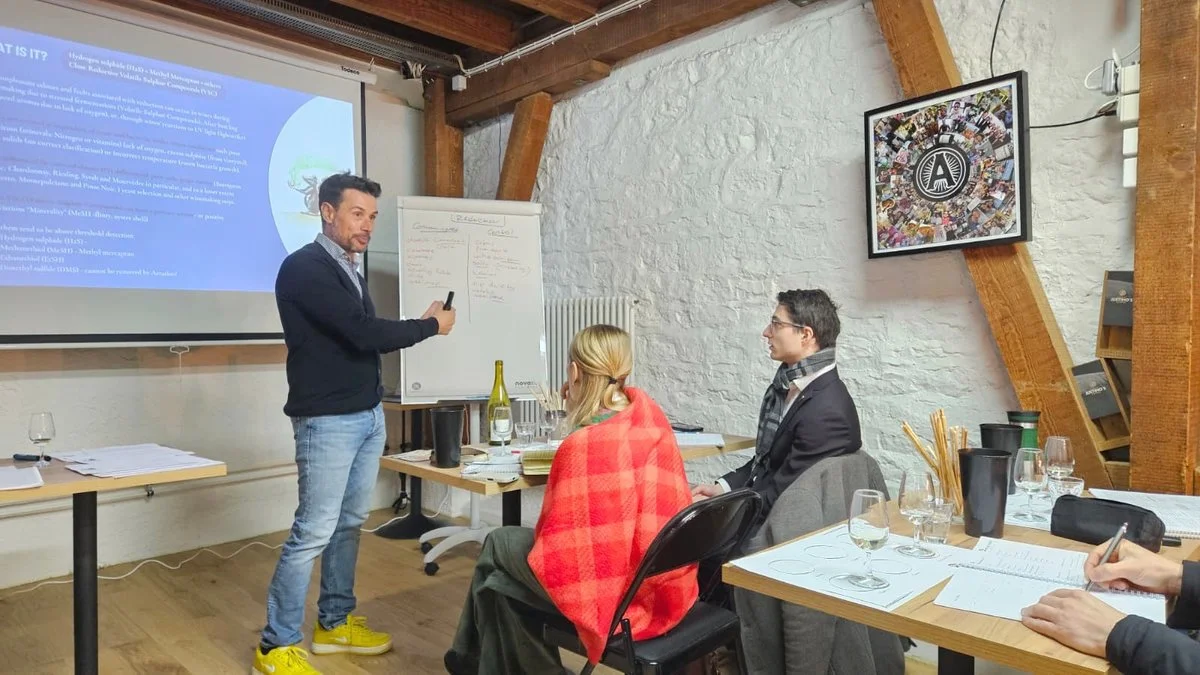
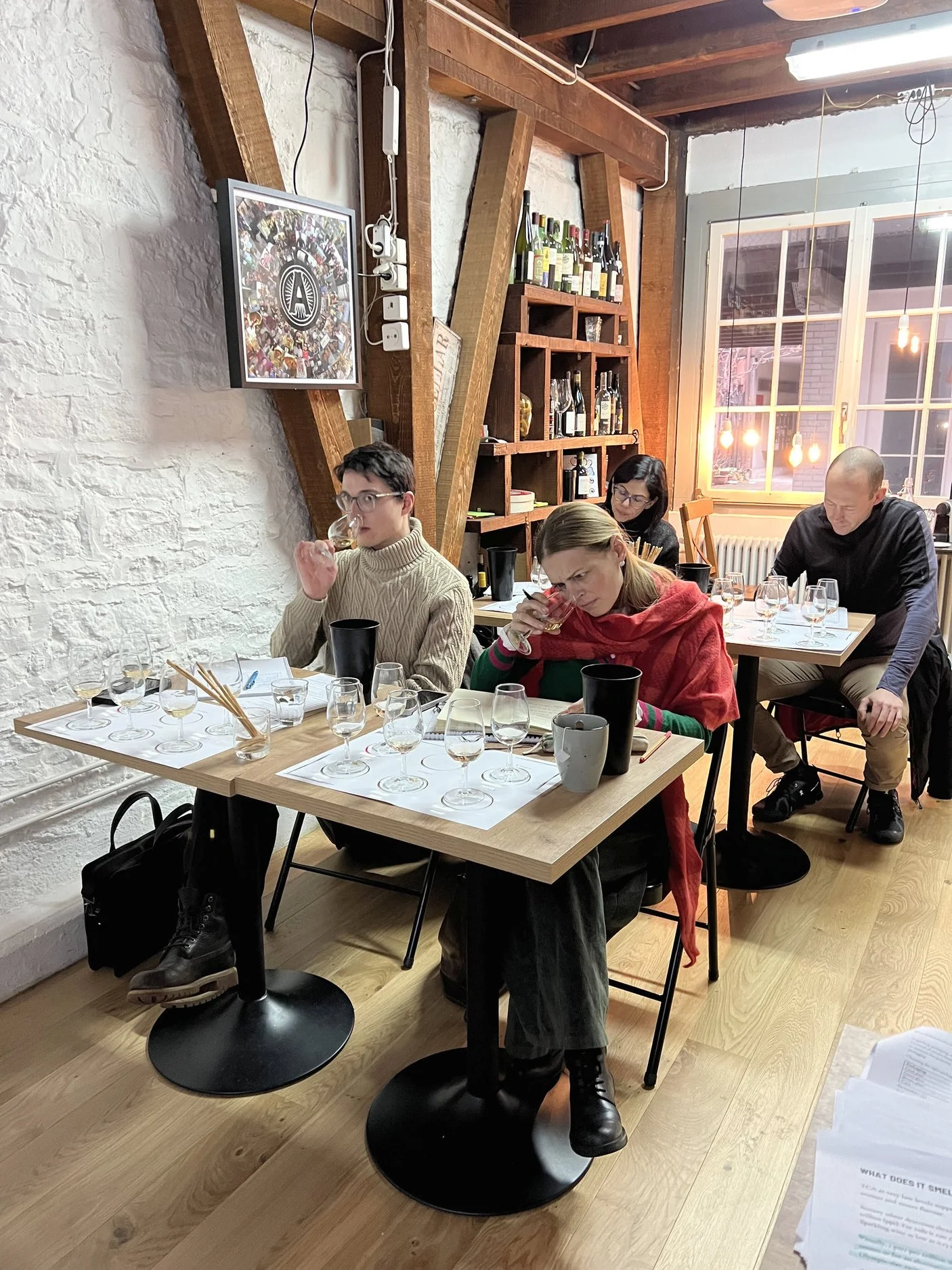
Join fellow working sommeliers and wine professionals in learning how to improve your sensory detection skills and recognise common wine faults. You will learn to identify these faults directly in the glass, through smell and taste, by always comparing them with a clean control sample
Over the course of 2 days and 12 hours of guided teaching and sensory evaluations, you will be able to detect the off-flavours and the components associated with Lightstrike, Reduction, Oxidation (Acetaldehyde), Volatile Acidity, and Cork Taint (2,4,6-Trichloroanisole (TCA)). You will also study Brettanomyces (4-Ethylphenol (4-EP)), the infamous Mouse (2-acetyl tetrahydropyridine (ATHP)), and more.
Experience the important boundaries between intended deviations (or characterful imperfections) and unequivocal wine faults when assessing low-intervention wines and very old, mature ones.
We will introduce you to the DAF (Deductive Approach to Faults), developed in collaboration with Sietze Wijma from Art of Tasting, so you can systematically and intuitively identify wine faults with confidence.
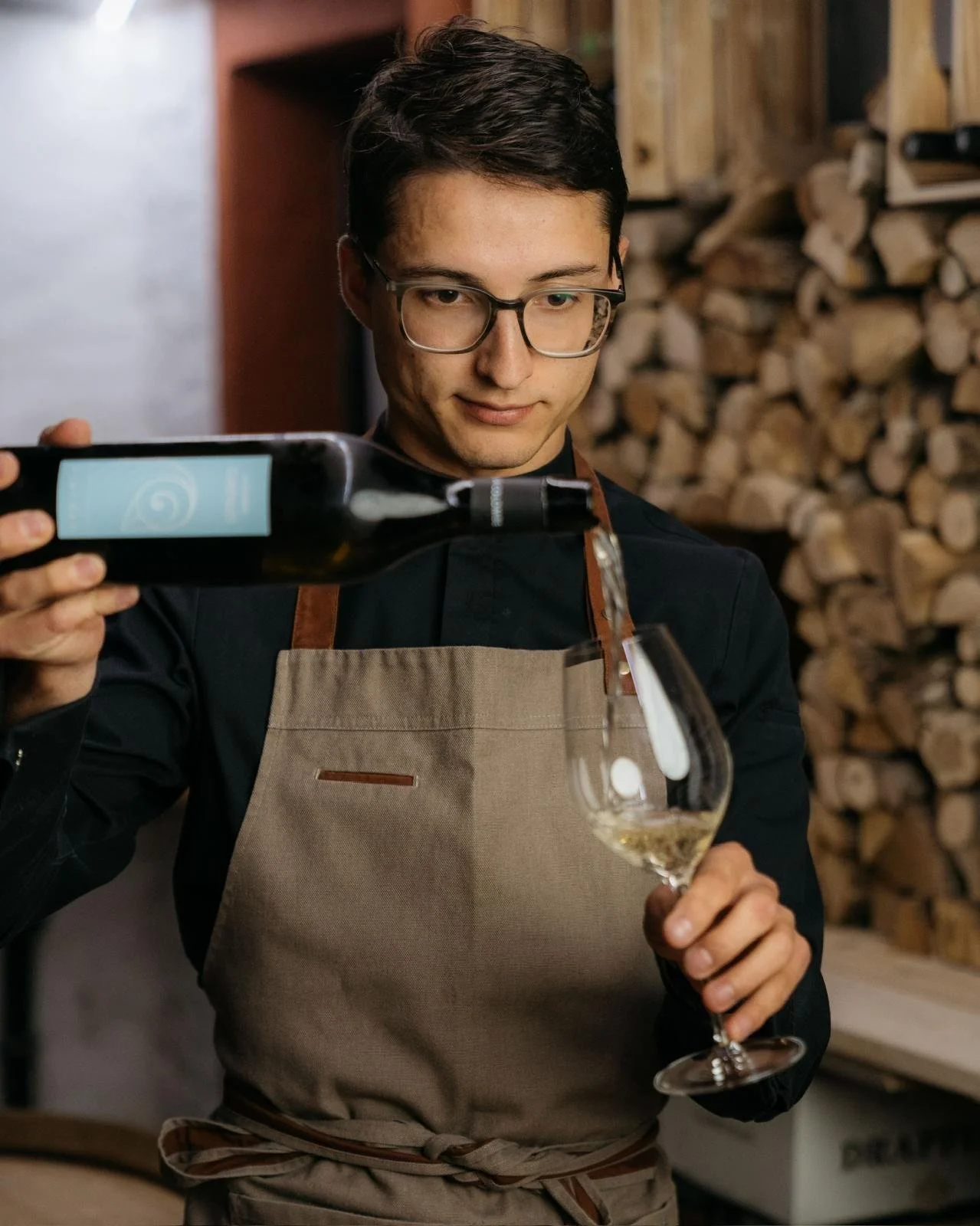
“What happens when a wine is not what it should be?”
“A super experience. I highly recommend it to every wine professional or wine lover who’d like to deepen their knowledge of wine overall.
We’ve all learnt how to taste wine when it’s nice and in perfect shape. But what happens when it’s not like it should be? Is it reduction, cork taint, oxidation, lightstrike, Brettanomyces…? Does the fault disappear with time? Or it is just great for the sink?
Juan will explain everything to be confident about it, in a very educated and approachable way. Don’t let it go.”
— Tony Lécuroux, MS | Paroles de Vins
COURSE CONTENT
What Will You Learn?
Faults vs. Taints vs. Deviations
Introduction to the DAF (Deductive Approach to Faults) for easy Wine Fault Identification
Lightstrike: The silent fault
Reduction: Minerality gone wrong
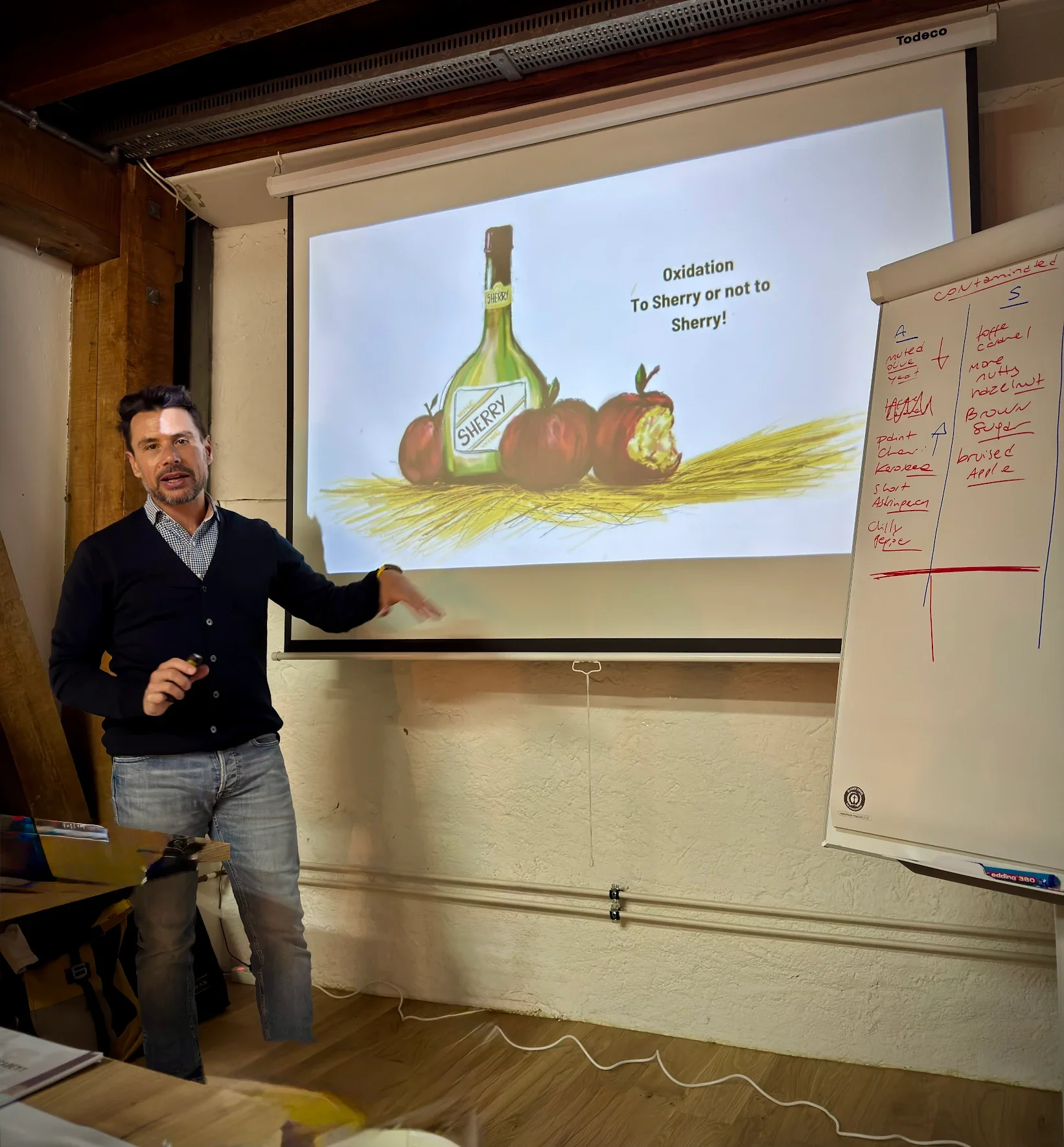
Oxidation: To Sherry or not to Sherry!
VA: On it’s way to vinegar
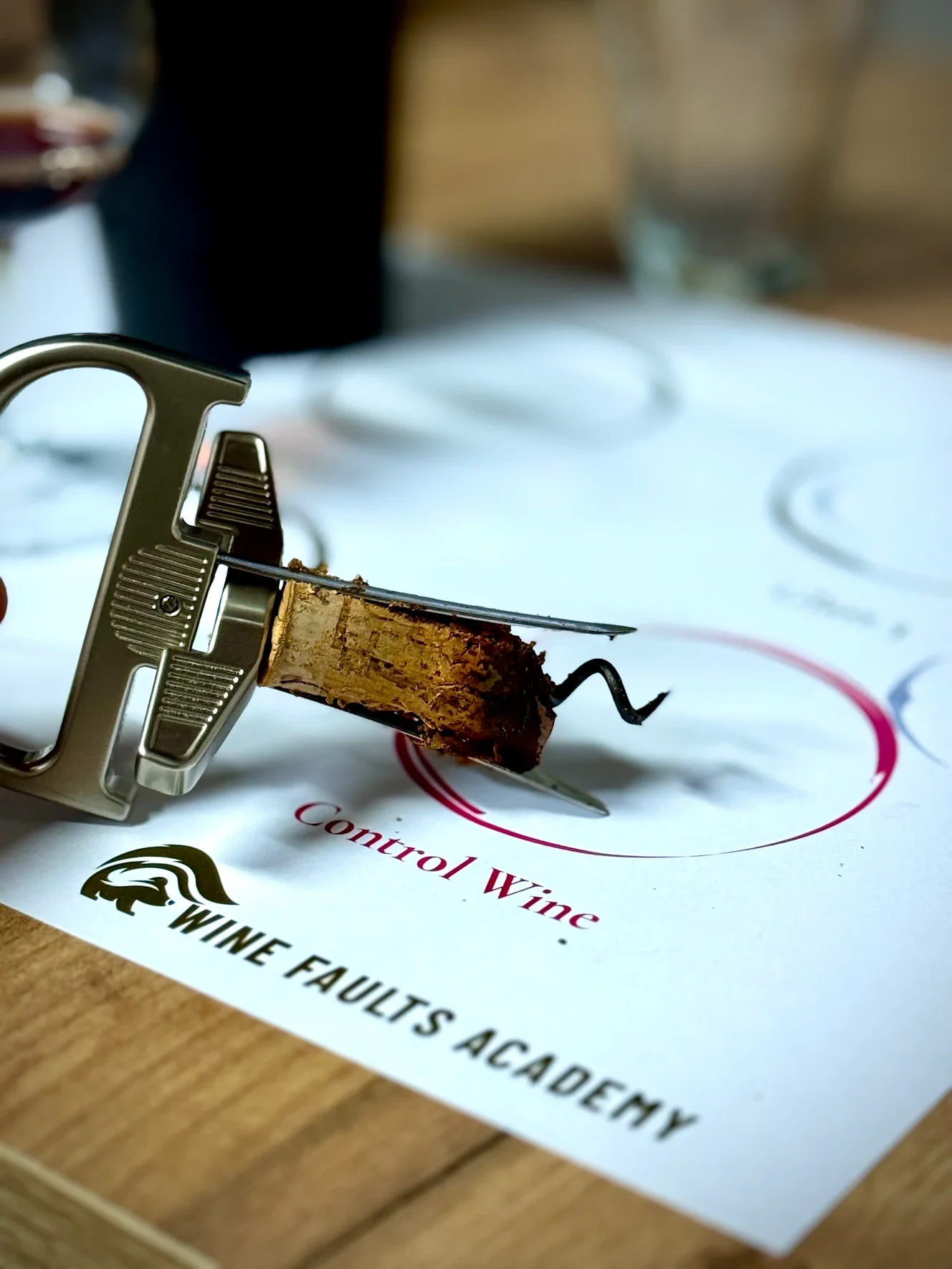
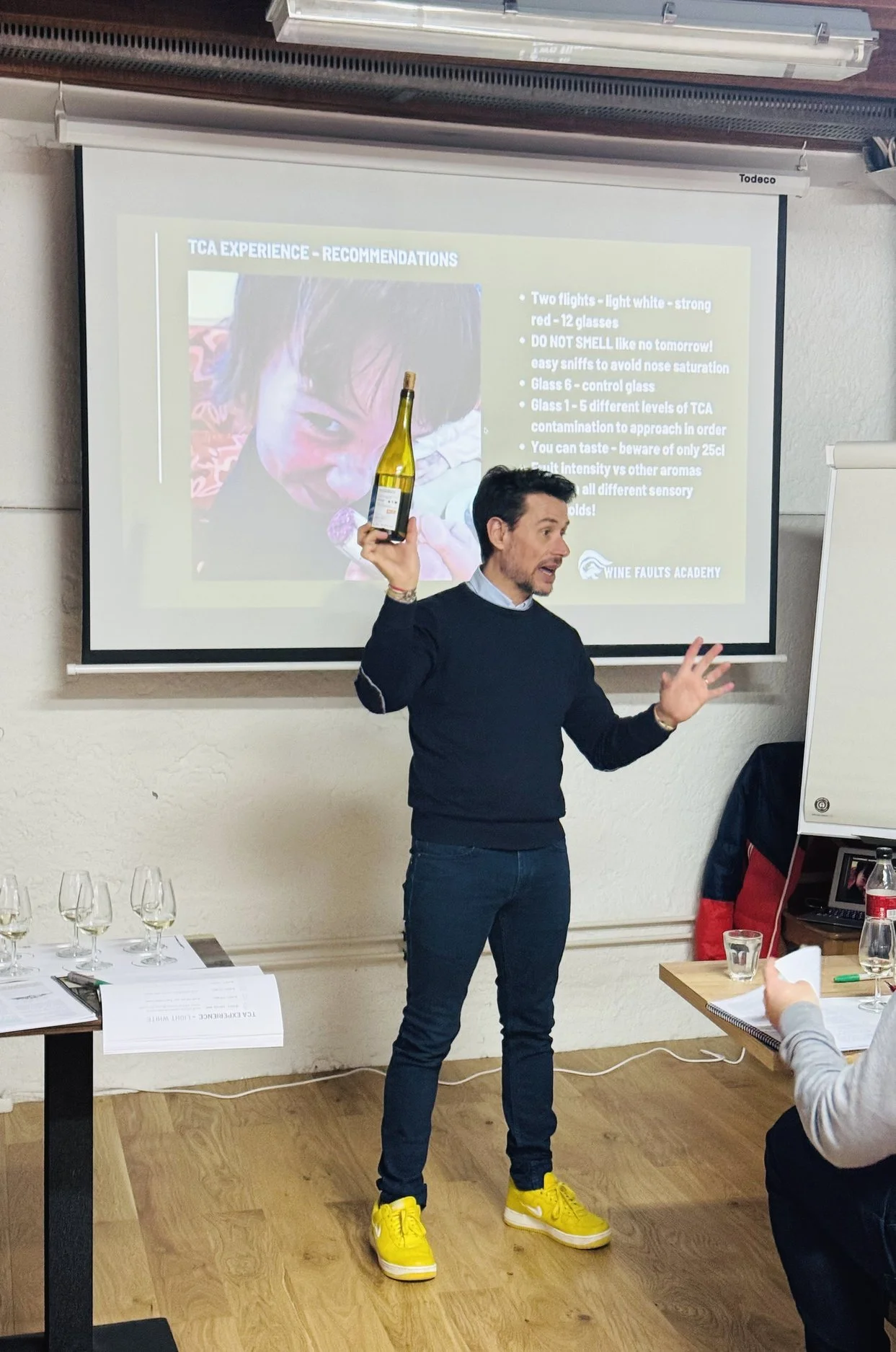
Cork Taint: Our unique 2,4,6-Trichloroanisole (TCA) experience with very low levels of contamination
Heat Damage: The cooked side of Madeira
Day One
Let's get Funky: Open discussion about funkiness in wines
Mousiness: A mouse in your mouth
Brettanomyces: The rogue yeast experience
Smoke Taint: The sad side of wildfires
Tertiary aromas vs wine faults: Where is the deviation line in very old, mature wines?
Collective knowledge & Best Practices for Cellar Management: You, the cause of spoilage, Wine by the glass, Faults at the service table.
What to do with faulty wines? Actions and suggestions.
Day Two
COURSE MATERIALS
What’s Included?
-
You will receive a Digital (PDF) and printed version of the “Wine Taints and Faults” course Workbook. A 74-page little encyclopedia with all you need to know about wine faults.
-
This class is delivered in English. German Workbooks will soon be available.
-
Multiple choice, 50 questions. 1 wine to taste blind to put your knowledge to the test: “Discover the wine fault”.
-
You will learn how to detect Wine Faults systematically through the Deductive Approach to Faults (DAF), developed by us and the Art of Tasting Sietze Wijma
-
For experienced (who might forget) or young sommeliers, learn best practices so you are not the cause of wine spoilage during service.
-
You will receive after the course a digital diploma via email.
COURSE OUTCOMES
What Will You Gain?
Student professionals leave the course feeling:
More confident and able to fully trust their judgment when it comes to wine faults sensory detection
An increased understanding of the cause and origins of common wine faults, and suggested actions they can follow
Equipped to have zero doubt when they detect on service (or at home) wines that are not showing as the winemaker intended
Most importantly, they feel as though they can transfer wine fault knowledge and facts to staff for training and to their teams
Next Course Dates
-
28 Sep/5 Oct 2026
Mondays
9:00 AM-4.30 PM
Location: Basel
Join fellow working sommeliers and wine professionals in learning how to improve your sensory detection skills and recognise common wine faults.Price: 986 CHF
-
29 Nov/6 Dec 2026
Sundays
9:00 AM-4.30 PM
Location: Basel
Join fellow working sommeliers and wine professionals in learning how to improve your sensory detection skills and recognise common wine faults.Price: 986 CHF
-
10/11 January 2027
Sunday - Monday
9:00 AM-4.30 PM
Location: Zurich (TBC)
Join fellow working sommeliers and wine professionals in learning how to improve your sensory detection skills and recognise common wine faults.Price: 986 CHF
Frequently Asked Questions
About our Advanced Wine Faults Course for Working Wine Professionals & Sommeliers
-
This course is for working wine professionals, sommeliers, and wine writers who have daily contact with wine and have often experienced that moment of doubt when detecting a wine that is not tasting as it should.
-
We deliver an open teaching environment where collective knowledge is created by the interaction between the teacher and the professional students. We select wines based on the learning experience they provide rather than price.
We use "intentionally contaminated" glasses that are spiked and always provided with a control sample to taste against. This allows professionals to build a clear tasting reference between a fault and a wine that maintains the integrity of its organoleptic characteristics.
-
Not at the moment. We are at a developing stage and we believe the value you get from our course is something that you can apply immediately in your professional working environment.
-
At the moment, we are establishing our courses in Basel and Zurich in Switzerland. We are also looking to expand internationally in collaboration with different wine academies around the world.
-
Not at the moment. We sincerely believe that in order to truly gain wine fault detection skills, personally tasting an intentionally spiked wine against a control sample is the best way to gain confidence. This provides the best learning experience and outcomes.
-
Yes. We choose wines that allow us to taste the "Low-Intervention Grey Zone." This teaches professionals how to determine if volatile acidity (VA), oxidation, or reduction is a stylistic choice by the winemaker or a definitive flaw that warrants a table return.